10 Signs You May Need Ruqyah Healing – Spiritual Protection Guide
Introduction: Why Recognising the Signs Matters
Have you ever felt a constant heaviness in your chest, unexplained fear, or nightmares that keep returning and that doctors cannot explain? These can be more than random experiences. They can be signs that you need Ruqyah.
Ruqyah is the Quranic method of seeking protection and healing. It is a Sunnah practice, used by the Prophet ﷺ and his companions, to guard against harm from the unseen. Not every hardship is caused by sihr (black magic), ayn (evil eye), or jinn, but knowing the signs helps you take the right steps, for both your spiritual and emotional wellbeing.
What Is Ruqyah?
Ruqyah is the recitation of specific verses of the Qur'an and authentic supplications (duas) of the Prophet ﷺ, for the purpose of:
Seeking protection from harm
Treating the effects of sihr, ayn, and jinn
Strengthening your connection with Allah
Seeking calm for the heart, mind, and body, by the will of Allah
The Prophet Muhammad ﷺ performed Ruqyah on himself with the Mu'awwidhatayn, Surah Al-Falaq and Surah An-Nas, the two Quls, and taught his companions to seek protection through the Qur'an, including Surah Al-Fatiha and Ayat al-Kursi.
Below are ten common signs that may indicate the need for Ruqyah. If you experience several of these symptoms persistently, it’s worth seeking spiritual healing alongside medical support.
The 10 Signs
Below are ten common signs that can indicate the need for Ruqyah. If several of these apply to you, and they persist, it is worth seeking spiritual help alongside medical care.
1. Persistent Unexplained Illness
Frequent sickness without a medical cause, or conditions that do not respond to treatment, can signal spiritual interference.
2. Nightmares and Disturbed Sleep
Recurring dreams of snakes, insects, shadows, falling, or being chased in a dream, or waking up in fear, can be a sign of spiritual disturbance.
3. Sudden Emotional Changes
Anger, sadness, or fear that appears suddenly and without reason can be a sign of ayn or sihr.
4. Feeling Spiritually Blocked
Difficulty concentrating in prayer, reluctance to read the Qur'an, or feeling distant from Allah can indicate the need for Ruqyah.
5. Hearing Whispers
Whispers that push you towards negative thoughts or sinful behaviour can be from the shayateen.
6. Isolation and Withdrawal
Suddenly avoiding family, friends, or the community can be a sign of the evil eye or sihr.
7. Marital or Family Discord Without Cause
Repeated arguments with no real reason, or a spouse suddenly losing affection, are classic signs of sihr intended to separate a couple.
8. Heavy Chest or Sudden Fear
Pressure on the chest, sudden panic, or unexplained fear when entering certain places can point to spiritual harm.
9. Repeated Failures and Blockages
Constant obstacles in work, studies, or business, despite sincere effort, can be caused by sihr or ayn.
10. Aversion to the Qur'an
If listening to the Qur'an causes discomfort, headaches, or unusual reactions, this can strongly indicate spiritual interference.
If several of these signs describe your situation and they persist, book a 1-to-1 assessment with a trained Raqi, sessions are online over Zoom, worldwide.
Spiritual or Medical? Both Matter
Do not assume every difficulty is spiritual. Islam teaches us to seek medical treatment too:
"Make use of medical treatment, for Allah has not made a disease without appointing a remedy for it." (Bukhari)
Ruqyah does not replace doctors or mental health professionals. If you are unwell, see your doctor. If symptoms persist despite medical care, Ruqyah can be the missing piece, and the two can work side by side.
What to Do If You Recognise These Signs
Step 1: Begin your daily protection. Recite Surah Al-Fatiha, Ayat al-Kursi, and the Mu'awwidhatayn (Surah Al-Falaq and Surah An-Nas) daily, alongside your morning and evening adhkar and praying on time.
Step 2: If the signs persist, get assessed. Some cases need a trained Raqi. Our team uses a structured Quranic assessment to understand whether what you are experiencing is spiritual, emotional, or something that needs medical attention first, so treatment is targeted, not guesswork. Book your assessment.
How We Can Help
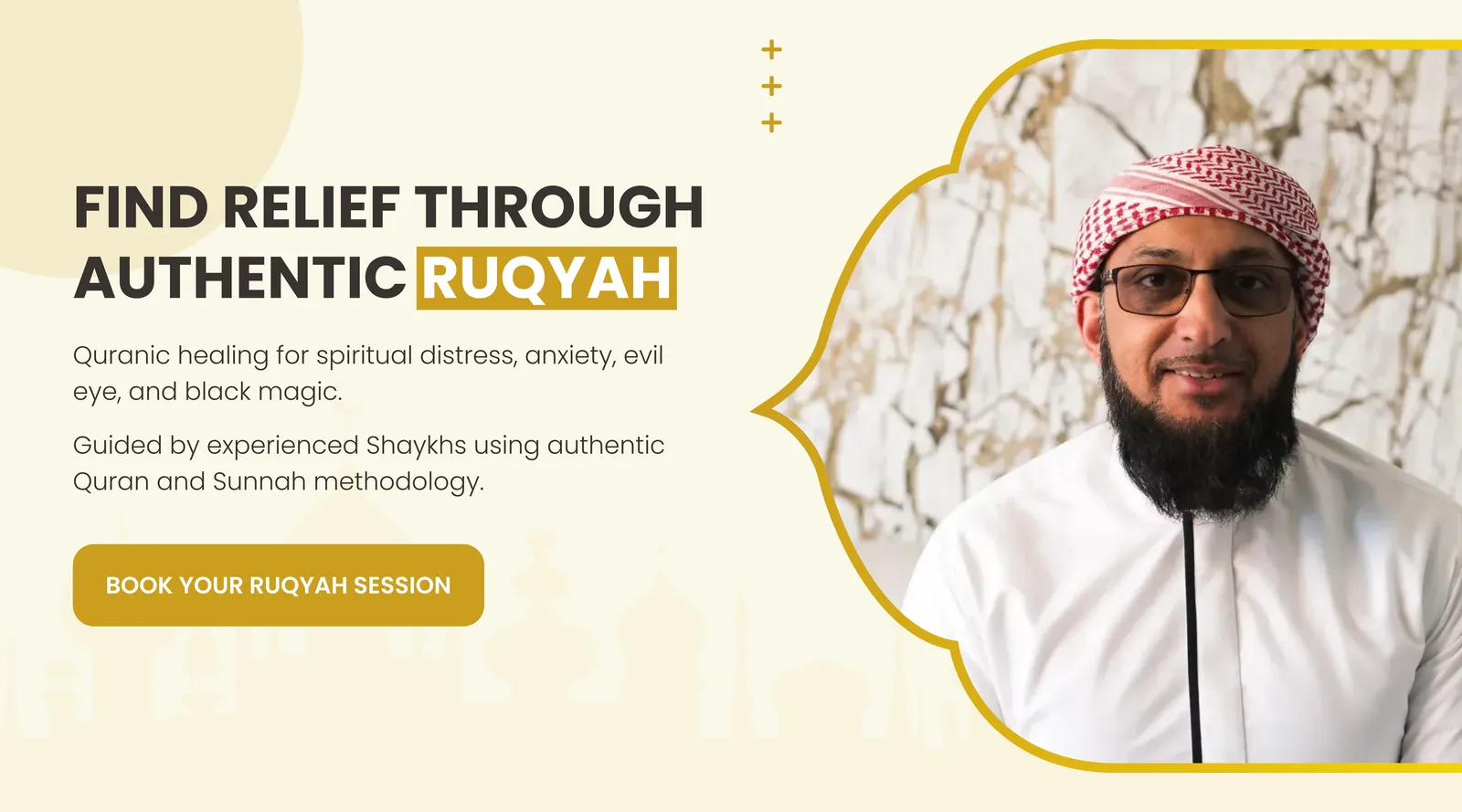
See how an online Ruqyah session works.
Ruqyah Treatment UK has served clients for over 20 years, strictly upon the Qur'an and Sunnah, no amulets, no superstition.
1-to-1 Ruqyah session, around one hour with an experienced Raqi, held online over Zoom. Book your session.
Wherever you are in the world. All our sessions are online, with appointment times to suit your time zone. We serve clients across the UK, the United States, and worldwide, including many brothers and sisters in America who could not find a trusted Raqi near them.
Group Ruqyah, a live online session every Saturday, a gentle way to begin. Ask about it when you book.
Ongoing care, for those who need structured, longer-term support, ask about the Ruqyah Wellness Plan during your session.
Healing is from Allah alone. Our role is to apply the Qur'an and Sunnah with care, structure, and accountability, and to be honest with you about what you need.
FAQs
Is online Ruqyah as effective as in person?
This is one of the most common questions we are asked. Ruqyah is the recitation of the Qur'an and du'a, and the words of Allah are not limited by distance. Healing comes from Allah, not from the room you sit in. Over Zoom, the Raqi recites, observes your reactions, assesses your condition, and guides you through the same structured process as any face-to-face session. This is how we serve all of our clients today, across the UK, the United States, and worldwide, by the grace of Allah.
Can I do Ruqyah myself?
Yes. Self-Ruqyah is a Sunnah and highly recommended. Start with our step-by-step guide.
Does everyone who has nightmares need Ruqyah?
No. Occasional bad dreams are normal. Consider Ruqyah if they persist and affect your daily life.
How long does it take to see results?
It varies from person to person. Some feel relief quickly; others need consistent treatment over time. Healing is in Allah's hands, and we will always be honest with you about progress.
Do you see clients outside the UK?
Yes. All sessions are online over Zoom, available worldwide, including the United States, with appointment times to suit your time zone.
Is Ruqyah safe?
Yes, when performed according to the Qur'an and Sunnah, without amulets or innovations, Ruqyah is safe.
Conclusion
Recognising the signs is the first step. If several of them describe your situation, do not carry it alone and do not wait for it to worsen.
Book a 1-to-1 session, online over Zoom, wherever you are in the world.
Explore Related Topics:
How to Prepare for a Ruqyah Session (Islamic Guidance)
Understanding the Evil Eye in Islamic Tradition
Recognise several of these signs?
Self-Ruqyah has its limits. Persistent signs need a trained Raqi's assessment. Our sessions are held online over Zoom, one to one, worldwide.