
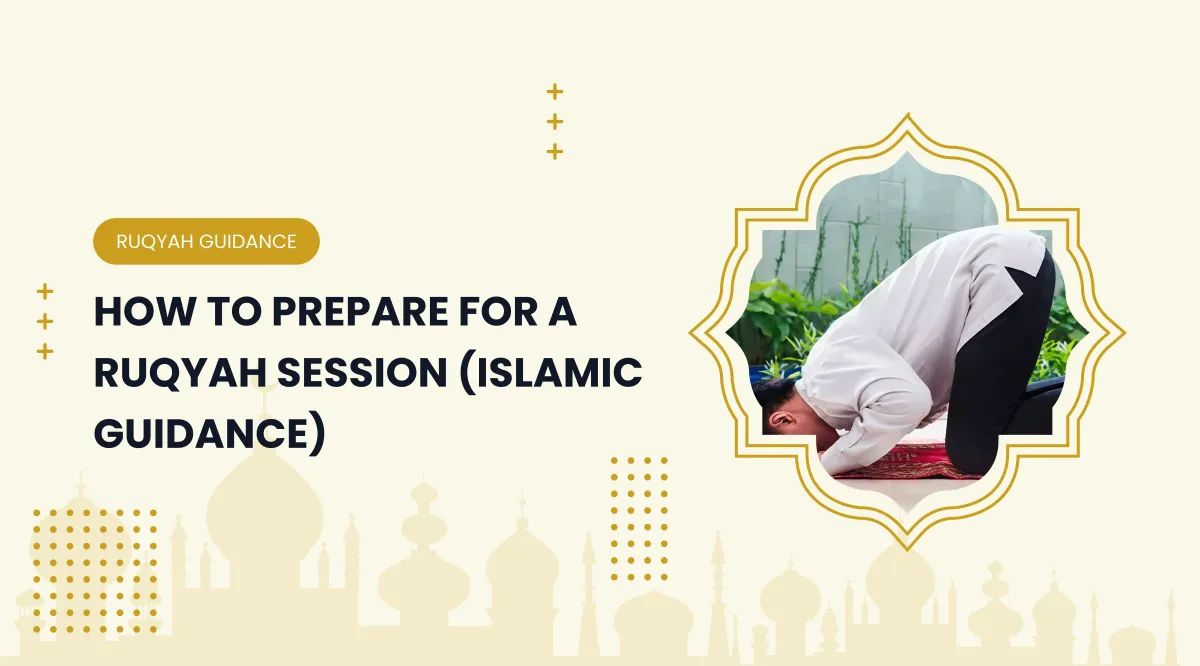
How to Prepare for a Ruqyah Session (Islamic Guidance)
Preparing for a Ruqyah session involves spiritual readiness, sincere intention, and reliance on Allah. Islam encourages approaching Ruqyah with calmness, trust in Allah, and adherence to Islamic practices such as prayer, Quranic recitation, and remembrance. Proper preparation helps individuals feel spiritually focused and comfortable during the session.
Why Preparation Matters in Ruqyah
Ruqyah is a spiritual practice rooted in worship and remembrance of Allah.
Preparation helps by:
Strengthening intention
Reducing anxiety or uncertainty
Encouraging spiritual focus
Creating a calm and respectful mindset
Islam teaches that actions are judged by intention, making preparation an important spiritual step.
Seeing the Right Intention
Begin With Sincere Niyyah
Before a Ruqyah session, it is recommended to:
Intend to seek Allah’s protection
Rely fully on Allah alone
Avoid expectations of guaranteed outcomes
Approach the session with humility
Ruqyah is an act of worship, not a transaction.
Spiritual Practices Before a Ruqyah Session

Many Muslims choose to spiritually prepare by:
Performing wudu
Praying two voluntary rak’ahs
Reciting Surah Al Falaq and Surah An Nas
Reciting Ayat ul Kursi
Engaging in dhikr and dua
These practices help create spiritual calm and readiness.
Creating a Calm Environment
If attending Ruqyah online or at home, it helps to:
Choose a quiet space
Minimise distractions
Dress modestly
Sit comfortably
Have water nearby if advised
A peaceful environment allows better focus on Quranic recitation.
Emotional and Mental Readiness

It is normal to feel nervous before a session.
Islam encourages:
Trust in Allah
Patience
Avoiding fear-based expectations
Staying open and calm
Everyone’s experience is different, and there is no single “correct” response during Ruqyah.
What Not to Expect From Ruqyah
To remain spiritually grounded and Google-compliant, it is important to understand that:
Ruqyah is not a medical treatment
Ruqyah does not guarantee outcomes
Ruqyah does not replace therapy or healthcare
Reactions vary from person to person
For ongoing physical or emotional concerns, professional medical or mental health support should always be sought.
The Role of the Ruqyah Practitioner
A trustworthy Ruqyah practitioner should
Use only the Quran and authentic duas
Maintain professionalism and confidentiality
Avoid fear-based language
Encourage reliance on Allah
Respect Islamic boundaries
If you are ready for your first session, you can book a 1-to-1 Ruqyah assessment, private, online over Zoom, worldwide.
How We Can Help
See how an online Ruqyah session works.
Ruqyah Treatment UK has served clients for over 20 years, strictly upon the Qur'an and Sunnah, with no amulets and no superstition.
1-to-1 Ruqyah session, around one hour with an experienced Raqi, held online over Zoom. Book your session.
Wherever you are in the world. All our sessions are online, with appointment times to suit your time zone. We serve clients across the UK, the United States, and worldwide, including many brothers and sisters in America who could not find a trusted Raqi near them.
Group Ruqyah, a live online session every Saturday, a gentle way to begin. Ask about it when you book.
Ongoing care, for those who need structured, longer-term support, ask about the Ruqyah Wellness Plan during your session.
Healing is from Allah alone. Our role is to apply the Qur'an and Sunnah with care, structure, and accountability, and to be honest with you about what you need.
Frequently Asked Questions
Do I need to fast before Ruqyah
Fasting is not required. Some people choose to fast voluntarily, but it is not an obligation.
Can Ruqyah be done online?
Yes, many people choose online Ruqyah when conducted according to Islamic guidelines.
Should I stop medical treatment before Ruqyah?
No. Ruqyah is a spiritual practice and should not replace medical or psychological care.
How long does a Ruqyah session take
Session length varies depending on the practitioner and the individual.
Can I perform Ruqyah on myself?
Yes. Many Muslims recite the Quran and duas for themselves as a form of self-Ruqyah.
If you are considering a Quran-based Ruqyah session and would like guided spiritual support, you may book a private session below.
Explore Related Topics:
Understanding the Evil Eye in Islamic Tradition
Ruqyah for Evil Eye Protection – Quranic Healing Explained
Ready for your first Ruqyah session?
Self-Ruqyah has its limits. Persistent signs need a trained Raqi's assessment. Our sessions are held online over Zoom, one to one, worldwide.