
What Is a Raqi in Islam? How to Choose a Qualified One
You have been told to see a Raqi, and now you are trying to work out who. The names come back quickly and there is nothing in them that tells you which of these people is qualified. It is a fair worry and it is the right one to have, because you are about to trust someone with your family's wellbeing. What is a Raqi in Islam, what makes one qualified, and what should you ask before you book? These questions have clear answers in the Qur'an and the Sunnah, and they are worth knowing before you speak to anyone.
What is a Raqi in Islam? The meaning of the word
A Raqi is one who performs ruqyah. That is the whole of the Raqi meaning: the word comes from ruqyah itself, which is the recitation of the Qur'an, the names and attributes of Allah, and supplications established in the Sunnah, over a person seeking protection or cure by the permission of Allah.
There is no clergy in Islam and a Raqi holds no office. Any Muslim can recite over themselves and over their household, and doing so is a Sunnah. When people say they are looking for a Raqi, they mean something more specific: someone who has made this their work, who knows the Qur'an and how to recite it correctly, and who has enough experience to assess a situation properly rather than guess at it.
Whatever the Raqi's standing, the healing itself is never his. The Prophet Ibrahim (peace be upon him) said of his Lord, "And when I am ill, it is He who cures me" (Surah ash-Shu'ara, 26:80). Ruqyah is a means, and Allah alone gives shifa. If the practice itself is new to you, our guide to what is ruqyah according to Islam sets out the evidence and the method in full.
What makes ruqyah permissible
Ruqyah existed before Islam and not all of it was clean. The Companions asked the Prophet ﷺ about the practices they had used in the days of ignorance, and he told them to present them to him, and said that there is no harm in ruqyah so long as it contains no shirk. This is narrated by Awf ibn Malik (may Allah be pleased with him) and recorded by Muslim in his Sahih.
That single condition is the root, and the scholars drew out what it requires in practice. Ibn Hajar al-Asqalani, in Fath al-Bari, records their agreement on three conditions for permissible ruqyah:
That it is with the words of Allah, or His names, or His attributes.
That it is in Arabic, or in words whose meaning is understood.
That it is believed to have no effect of itself, but only by the decree of Allah.
The third condition is the one that decides everything else. A Raqi who believes his recitation is what does the work has already gone wrong, however beautiful the recitation is. A Raqi who knows he is holding a means in his hands, and that the outcome belongs to Allah, will treat you honestly, because he has nothing to prove.
What makes a Raqi qualified
There is no single certificate that settles this, but that does not mean every Raqi stands equal.
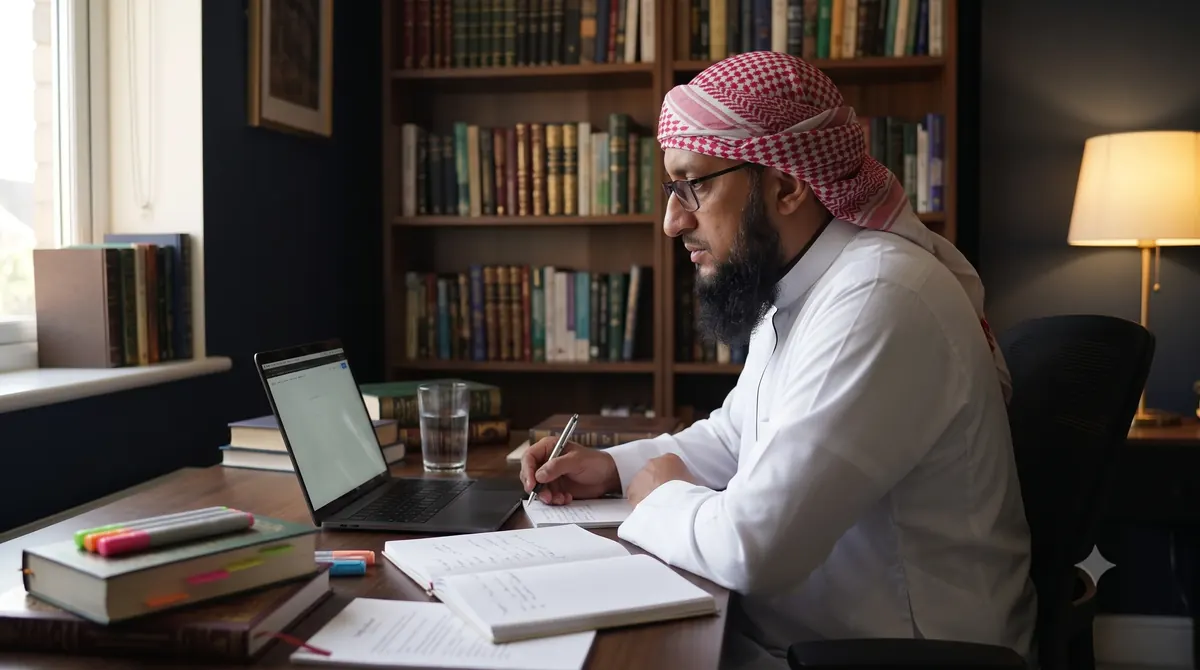
The treatment is the Qur'an, so the depth of a Raqi's knowledge of the Qur'an decides the quality of the treatment. That means the sciences behind it: how a verse was revealed and what it was revealed about, what the scholars of tafsir have said about its meaning, and how the Prophet ﷺ himself used it. It means the same in Hadith: knowing which narrations are established, how the scholars graded them, and what the Prophet ﷺ actually did in a given situation rather than what has been passed around as practice. A Raqi who has studied these under teachers, at an accredited institute, is drawing on a body of knowledge. A Raqi who has not is drawing on what he has picked up. Our own Raqis are qualified scholars, and you can see their scholarly credentials on the homepage.
This shows in how a case is handled. A fixed recitation, given to everyone with the same complaint, is not a treatment plan. Sihr in particular does not behave that way. What a person needs at the start of a case is not what they need three weeks in, and a Raqi grounded in the evidence can tell the difference and change course. One working from a set routine cannot, because he has nothing to change course with.
Experience is the other half of it. Years of cases teach a Raqi what the books alone cannot, and the two together are what you are looking for. These are the things that count.
Knowledge of the Qur'an and correct recitation
The treatment is the Qur'an, so the Raqi's relationship with the Qur'an is the foundation of everything. Correct recitation, an understanding of what is being recited, and formal study behind both.
Sound aqeedah
A Raqi's belief about where the effect comes from is where the third condition of permissible ruqyah lives or dies. It shapes every decision he makes in a session, and it is the difference between ruqyah and something that only looks like it.
Assessment before treatment
A qualified Raqi finds out what he is dealing with before he treats it. In our practice every situation is assessed across three dimensions: the spiritual, the emotional and psychological, and the physical. Starting with a structured assessment is what stops months being spent treating the wrong thing.
Honesty about what is not spiritual
Where we believe a cause is medical or psychological, we say so plainly and encourage the person to see a doctor. Ruqyah sits alongside qualified medical care and never in place of it. A Raqi who can tell you your situation is not what you thought it was is a Raqi worth listening to.
Structure afterwards
One recitation and a farewell leaves a person guessing. What should follow is a plan, and a case that is followed and reviewed week by week, so the treatment moves with the person's state rather than staying where it started.
Openness about who is treating you
You should be able to find out, before you book, who your Raqi is and what they have studied. Ours are named and their credentials shown, so you know who you are speaking to before you book.
Book your one-to-one Zoom session
What authentic ruqyah never involves
Everything a Raqi needs is recitation of the Qur'an, the names and attributes of Allah, and supplications from the Sunnah. Nothing beyond that is required, which makes for a short and useful list of things you will never be asked for.
Personal items. An item of clothing, a lock of hair, or anything else belonging to the afflicted person. Recitation is made over the person, not over their possessions, and there is nothing in the Sunnah that asks for these.
Your mother's name or your date of birth. These are the tools of fortune-telling, not of ruqyah, and they have nothing to do with the Qur'an. Going to a fortune teller or a palm reader is a serious matter in the deen, and the door to it is often opened by a request that sounds harmless.
The name of whoever is said to have done this to you. No one can know that. It belongs to the unseen, and Allah alone has knowledge of it. What that kind of naming does is entirely predictable: a person is told a relative is behind it, and a family is broken over a claim nobody can verify. A Raqi treats the affliction. He does not hand out accusations.
An amulet to wear or keep. Taweez and amulets are not part of authentic ruqyah and are rejected outright, with no exceptions made for their contents. Our guide on whether taweez is shirk covers the evidence in detail.
What a session with a qualified Raqi looks like
Knowing the shape of a proper session makes it much easier to recognise one. It opens with a structured assessment: what you are experiencing, when it began, what has been ruled out medically, and how it behaves over time. Then comes recitation of the Qur'an, with the Raqi observing carefully as he recites. Then you are told plainly what was found and what the next step is.
Sessions are strictly one to one, so you can speak openly about things you would not say in front of family. What comes after the first depends on what the assessment finds. No one can say in advance how long ruqyah takes, and a Raqi who tells you it will take a set number of sessions is telling you something he cannot know. Our guide to what happens during a ruqyah session walks through it step by step.
The questions to ask before you book
You are allowed to ask these, and a qualified Raqi will be glad you did.
What exactly do you recite, and where in the Qur'an and Sunnah does it come from?
Do you assess before you treat, and what does that assessment cover?
What happens if you believe my problem is medical or psychological?
Will you ask me for any object, or for any personal detail beyond my situation?
Who will be treating me, and what have they studied?
How will my case be followed after the first session?
Can you tell me how many sessions this will take?
That last one is a test rather than a question. The honest answer is no, because ruqyah is not a fixed science and the outcome rests with Allah. What can be promised is the structure around you, not a date. If you want to see how we answer these in writing before you speak to anyone, they are set out across our services.
Is there a Raqi near me, and can a Raqi work online?
"Raqi near me" is one of the most common searches there is, and behind it sits the assumption that the right Raqi is the closest one. Proximity is not what makes ruqyah work. A Raqi twenty minutes away who does not assess, or who promises you an outcome, is not the safer choice for being nearby.
The recitation of the Qur'an is not limited by distance. Its effect is by the permission of Allah, and it reaches a person wherever they are. This is why working with Raqis online is not a lesser version of the treatment. It is how the treatment reaches you: the same assessment, the same recitation, the same weekly review, with a qualified Raqi you would otherwise never have been able to sit with. Our article on whether online ruqyah is permissible in Islam deals with the evidence directly.
How we can help
If you have been trying to work out who to trust, that is a good instinct and it is worth acting on rather than sitting with. Our sessions are online over Zoom and strictly one to one, led by qualified Shaykhs. We assess before we treat, we tell you honestly what we find, and where we believe the cause is medical we say so and encourage you to see a doctor.
You will not be asked for an item of clothing, a lock of hair, your mother's name or your date of birth, and you will not be handed an amulet. What you will be given is a clear picture of your situation and a plan you are followed on week by week, so you are never left guessing between sessions. Read more about our private one-to-one ruqyah treatment, or book directly at ruqyahtreatment.com/book-appointment.
Book your one-to-one Zoom session
Frequently asked questions
What is a Raqi in Islam?
A Raqi is a Muslim who performs ruqyah: reciting the Qur'an, the names and attributes of Allah, and supplications from the Sunnah over a person seeking protection or cure by the permission of Allah. It is not a clergy title. In practice it describes someone with the knowledge and experience to assess and treat properly.
How do I know if a Raqi is qualified?
Ask what they recite and where it comes from, whether they assess before they treat, what happens if they believe the cause is medical, and how your case will be followed afterwards. Ask also what they have studied and where. A qualified Raqi answers all of it plainly, names their own limits, and never claims the healing is theirs to give. Our Raqis are qualified scholars, and their scholarly credentials are set out on our homepage.
What are the conditions of permissible ruqyah?
Ibn Hajar al-Asqalani records in Fath al-Bari that ruqyah is agreed to be permissible on three conditions: that it is with the words of Allah, His names or His attributes; that it is in Arabic or in words whose meaning is understood; and that it is held to have no effect except by the decree of Allah.
Is there a Raqi near me, or can a Raqi work online?
What matters is that the Raqi is qualified, not how close they are. The recitation of the Qur'an is not limited by distance and its effect is by the permission of Allah. Our sessions are online over Zoom and one to one, so a qualified Raqi is reachable wherever you are.
What should a Raqi never ask me for?
Authentic ruqyah needs only recitation of the Qur'an, the names and attributes of Allah, and supplications from the Sunnah. You will not be asked for an item of clothing, a lock of hair, your mother's name, or your date of birth, and you will not be given an amulet to wear.
A note on medical care
Nothing here is medical advice and none of it is a diagnosis. Many of the difficulties people bring to a Raqi have ordinary medical and psychological causes, and those should be investigated with a qualified doctor. Ruqyah is a means by which Allah gives healing, and it is practised alongside medical care, never as a replacement for it. Shifa belongs to Allah alone.