
Signs of Evil Eye in Islam: Ayn Symptoms Explained
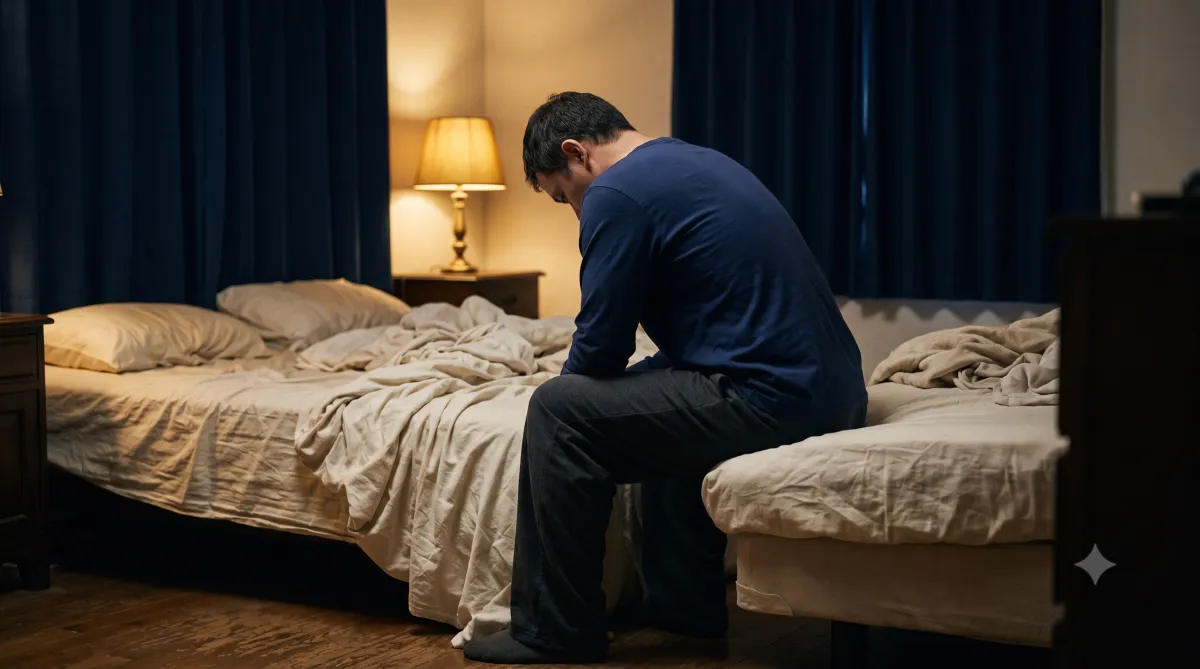
Something changed, and there was no reason for it. You were well, and then you were not. A child who was settled became restless. A marriage that was steady turned tense within a week. Work that was moving forward stalled. When brothers and sisters search for the signs of evil eye, this is usually why: not curiosity, but a change they cannot explain and cannot shake off. The evil eye (al-ayn) is real, and the Prophet ﷺ spoke about it plainly. There are evil eye symptoms we look at in a session when someone describes a change like this, and there is an honest caveat that goes with every one of them.
The evil eye is real, and the Sunnah says so plainly
The Prophet ﷺ said, "The evil eye is real" (Sahih al-Bukhari 5740, Sahih Muslim 2188). It is not folklore. It is part of what a Muslim believes about the unseen.
Al-ayn is harm that reaches a person through the look of another. Envy is often behind it, and Allah instructs us to seek refuge "from the evil of an envier when he envies" (Surah Al-Falaq, 113:5). But envy is not always the cause. When Amir ibn Rabi'ah (may Allah be pleased with him) admired Sahl ibn Hunayf (may Allah be pleased with him) and Sahl fell ill, the harm followed simple admiration, from a brother who wished him nothing but good (Sunan Ibn Majah 3509). That is worth holding on to, because it means the eye is not always something sent against you by someone who hates you. Sometimes it comes from someone who loves you.
If you want the concept itself covered in full, the meaning of al-ayn and where it sits in the deen, read our guide to understanding the evil eye in Islam.
Signs of evil eye we see in sessions

Twenty years of practice puts the same signs in front of us again and again. They are what we observe, not a scholarly ruling, and not a measure for you to hold yourself against. No single sign settles anything. A Raqi looks at the whole picture: how it started, how the signs cluster, how long they have held, and how they behave over time. Reaching a verdict about yourself is not something anyone can do from symptoms alone, because the unseen is not ours to weigh up. If ruqyah itself is new to you, our guide on what is ruqyah according to Islam covers the practice from the Qur'an and the Sunnah.
A sudden change with nothing behind it
This is the one that brings most people to us. A person was fine, and then, from a particular day, they were not. Often it traces back to a moment: a gathering, a photograph shared, a piece of good news that spread, a new house, a new job, a wedding. Nothing in the person's health or circumstances explains the drop, and yet the drop is real and everyone around them can see it.
Heaviness and tiredness that rest does not lift
Not ordinary tiredness. A weight across the chest, the shoulders and the head that sleep does not clear, so the person wakes as tired as when they lay down. Some describe it as walking through water. Motivation goes with it, and tasks that were easy last month feel beyond reach.
Physical symptoms with no medical cause found
Recurring headaches, nausea, stomach pain, pain that moves around the body, appetite that disappears or doubles. What marks these out is the outcome of investigation: the person has seen a doctor, tests have been run, and nothing has been found. The symptoms are genuine and the reports are clear.
A change in how a person is towards worship
Salah becomes heavy in a way it never was. The Qur'an gets picked up less. The person still wants their deen, and they will tell you so with real distress, but something sits between them and it. This is often the sign that troubles people the most, and it is often the one they mention last.
Barakah lifting off what was going well
Income that no longer stretches the way it used to. A business that was growing and now cannot hold a deal together. A home that was calm and is now full of arguments that start over nothing and end nowhere. The circumstances have not changed; the blessing in them has.
Responses when the Qur'an is recited
Under recitation, some people yawn heavily and repeatedly, or their eyes stream, or a headache arrives that was not there minutes before, or agitation rises for no reason they can name. Others feel nothing at all, which rules nothing out. This is one of the reasons a first session is an assessment: a Raqi recites and observes under controlled conditions, rather than asking a person to interpret their own reactions at home. Where the assessment does point to al-ayn, our guide to ruqyah for evil eye protection covers the treatment side in detail.
For the duas to recite, see the protection duas from the Qur'an and Sunnah.
Book your one-to-one Zoom session
Why evil eye symptoms are so easily mistaken
Almost every one of those signs is also a symptom of something ordinary. Low iron, an underactive thyroid, poor sleep, burnout, grief, anxiety and depression can all produce exhaustion, low motivation, headaches and a heavy chest.
We say this plainly because saying it is part of doing this properly. Every situation we see is assessed across three dimensions: the spiritual, the emotional and psychological, and the physical. Not everything is spiritual. Where we believe the cause is medical or psychological, we say so and we encourage you to see a doctor, because ruqyah sits alongside qualified medical care and never in place of it.
The signs matter, and so does the caution. Both are true at once.
Ayn, sihr and jinn are not the same thing
These three are constantly mixed together, and treating one as another wastes months. Al-ayn reaches a person through a look. Sihr is deliberate, worked by someone, and it usually follows a different pattern in how it begins and how it holds. Affliction by jinn is different again in how it presents in a session. The symptoms overlap, which is exactly why the distinction is drawn in an assessment rather than from a list. If your situation looks more like the second of these, our guide to the signs of black magic in Islam covers sihr in the same detail.
Protection: what the Sunnah actually gives you
People search for an evil eye surah, and the honest answer is better than a single verse. The Prophet ﷺ sought refuge with the Mu'awwidhatayn, Surah Al-Falaq (113) and Surah An-Nas (114), the two surahs of seeking refuge, narrated by Uqbah ibn Amir (may Allah be pleased with him). Al-Falaq closes on the envier and his envy, which is the eye at its root.
Alongside them the Sunnah gives du'as that name the envious eye directly. When the Prophet ﷺ was unwell, Jibril (peace be upon him) recited over him: "In the name of Allah I perform ruqyah for you, from everything that harms you, from the evil of every soul or envious eye. May Allah heal you, in the name of Allah I perform ruqyah for you" (Sahih Muslim 2186). And the Prophet ﷺ would seek refuge for al-Hasan and al-Husayn (may Allah be pleased with them) with the words: "I seek refuge for you both in the perfect words of Allah, from every devil and poisonous creature, and from every envious eye" (Sahih al-Bukhari 3371).
There is a protection that runs the other way too. When you see something you admire in someone, ask Allah to bless it for them. That instruction comes from the Prophet ﷺ in the narration of Sahl ibn Hunayf, where he asked why a man would harm his brother, and told him that on seeing something he likes he should pray for barakah for its owner (Sunan Ibn Majah 3509). Guarding others from your own gaze is half of this subject, and it is the half almost nobody searches for.
For the recitation and remembrances gathered in one place, see our guide to the surahs for protection in Islam. Reciting over yourself and your household is a Sunnah in its own right and it is where every Muslim starts. It also has limits. When signs persist and are affecting a person's life, an assessment by a trained Raqi is the honest next step, so the Qur'an can be recited over the afflicted person properly and the case followed week by week.
How we can help
You do not need to be certain that al-ayn is the cause before you book. That is what a first session is for. If the signs above are persistent and match what you are living with, we will assess honestly, recite over you, and give you a clear plan. If we believe the cause is medical, we will say so plainly and encourage you to see a doctor.
Sessions are online, over Zoom, and strictly one to one, in a private setting where you can speak openly. The recitation of the Qur'an is not diminished by distance. Its effect is by the permission of Allah, and it reaches you wherever you are. What comes after the first session depends on what that assessment finds. No one can say in advance how long ruqyah takes, and we do not promise a number of sessions. What we do offer is structure: you are followed and reviewed week by week, and you are never left guessing in between. You can read more about our private one-to-one ruqyah treatment, or book directly at ruqyahtreatment.com/book-appointment.
Book your one-to-one Zoom session
Frequently asked questions
What are the signs of evil eye in Islam?
The signs we see most often are a sudden change with nothing behind it, heaviness and tiredness that rest does not lift, physical symptoms with no medical cause found, a new heaviness towards Salah, barakah lifting off things that were going well, and responses under Qur'anic recitation. No single sign is conclusive on its own.
Is the evil eye real in Islam?
Yes. The Prophet ﷺ said, "The evil eye is real" (Sahih al-Bukhari 5740, Sahih Muslim 2188), and Allah instructs us to seek refuge from the evil of an envier when he envies (Surah Al-Falaq, 113:5). It is part of what a Muslim believes about the unseen, not a cultural superstition.
Which surah is recited for the evil eye?
The Prophet ﷺ sought refuge with the Mu'awwidhatayn, Surah Al-Falaq (113) and Surah An-Nas (114). Al-Falaq closes on the envier and his envy. The Sunnah also gives du'as that name the envious eye directly. A full course of ruqyah is not a fixed set of verses; a Raqi sets it after an assessment.
Can evil eye symptoms be confused with ordinary illness?
Yes, and often. Low iron, thyroid problems, poor sleep, burnout, anxiety and depression can all produce exhaustion, headaches and low motivation. This is why medical causes are ruled out first. Ruqyah sits alongside qualified medical care, never in place of it, and an assessment weighs all three dimensions together.
Can someone give the evil eye without meaning to?
Yes. In the narration of Sahl ibn Hunayf, the harm followed simple admiration from a brother who wished him only good. This is why the Prophet ﷺ taught that when you see something you admire in someone, you ask Allah to bless it for them, guarding them from your own gaze.
A note on medical care
Nothing here is medical advice and none of it is a diagnosis. Many of the symptoms described have ordinary medical and psychological causes, and those should be investigated with a qualified doctor. Ruqyah is a means by which Allah gives healing, and it is practised alongside medical care, never as a replacement for it. Shifa belongs to Allah alone.