Dua for Shifa: Qur'anic Duas and Verses for Healing
When illness comes, to you or to someone close to you, a believer does two things together. They seek treatment, and they turn to Allah, because shifa (healing) comes from Him alone. The Prophet ﷺ did both, and he taught a dua for shifa for each situation: for yourself when you are in pain, and for someone else when you visit them.
Here are those duas, the verses of the Qur'an that speak of healing, and what to do when an illness seems to be more than physical.
Seeking treatment is itself Sunnah
Before any dua, one thing must be clear. Making dua is not a reason to leave medicine. The Prophet ﷺ said: "Allah has not sent down any disease without sending down a cure for it" (Sahih al-Bukhari 5678).
When people asked him whether they should seek treatment, he answered: "Seek treatment, for Allah has not created a disease without creating a remedy for it" (Sunan Abi Dawud 3855).
The Qur'an itself points to a physical means of healing. Speaking of the bee, Allah says:
يَخۡرُجُ مِنۢ بُطُونِهَا شَرَابٞ مُّخۡتَلِفٌ أَلۡوَٰنُهُۥ فِيهِ شِفَآءٞ لِّلنَّاسِۚ إِنَّ فِي ذَٰلِكَ لَأٓيَةٗ لِّقَوۡمٖ يَتَفَكَّرُونَ
"From their bellies comes a drink of different colours, in which there is healing for people. Indeed, in that is a sign for people who reflect" (Surah An-Nahl, 16:69).

So see your doctor, take the treatment, and make dua alongside it. The medicine is the means. The One who heals is Allah.
Dua for shifa from the Sunnah
These are the duas the Prophet ﷺ himself used and taught for illness. They are short, and every Muslim can learn them.
The dua for someone who is ill
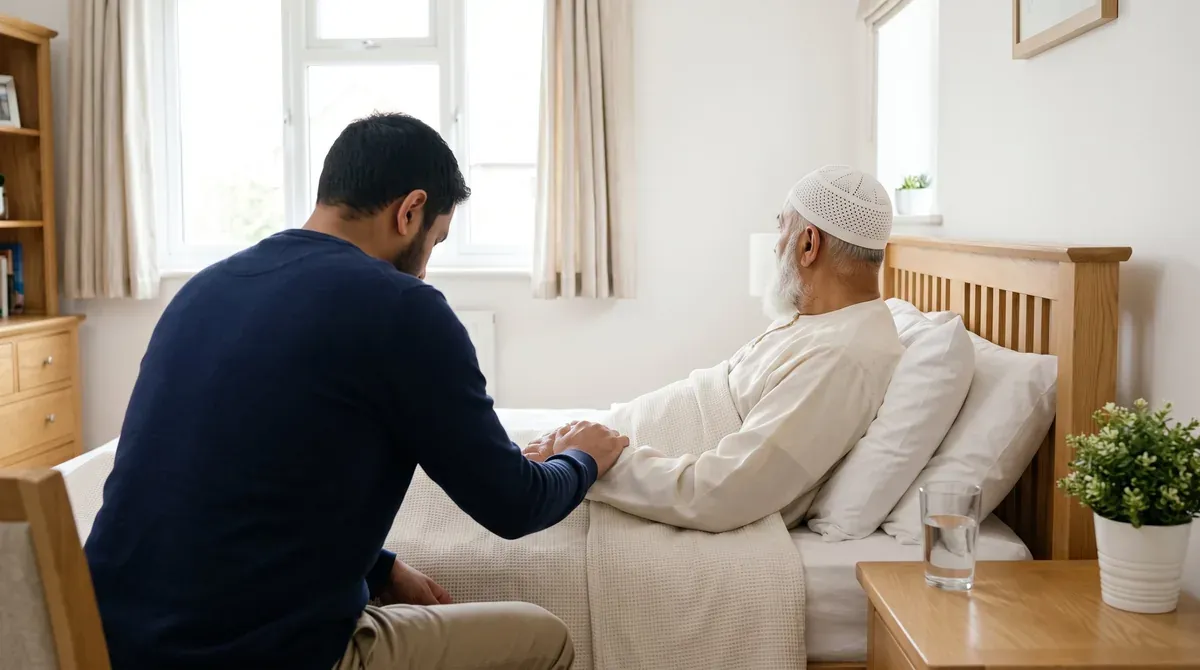
When the Prophet ﷺ visited someone who was sick, he would say (Sahih al-Bukhari 5675, Sahih Muslim 2191):
أَذْهِبِ الْبَاسَ رَبَّ النَّاسِ، اشْفِ وَأَنْتَ الشَّافِي لاَ شِفَاءَ إِلاَّ شِفَاؤُكَ، شِفَاءً لاَ يُغَادِرُ سَقَمًا
Adhhib al-ba's, Rabb an-nas, ishfi wa anta ash-Shafi, la shifa'a illa shifa'uk, shifa'an la yughadiru saqama.
"Remove the harm, Lord of the people. Heal, for You are the Healer. There is no healing except Your healing, a healing that leaves no illness behind."
In the narration in Sahih Muslim, he would also wipe the sick person with his right hand as he said it.
The dua when you are in pain yourself
A Companion, Uthman ibn Abi al-As, told the Prophet ﷺ about a pain he had carried in his body for a long time. The Prophet ﷺ said: "Put your hand on the part of your body that hurts and say Bismillah three times. Then say seven times: I seek refuge in Allah and His power from the harm of what I feel and what I fear" (Sahih Muslim 2202).
بِاسْمِ اللَّهِ (three times)
أَعُوذُ بِاللَّهِ وَقُدْرَتِهِ مِنْ شَرِّ مَا أَجِدُ وَأُحَاذِرُ (seven times)
Bismillah. A'udhu billahi wa qudratihi min sharri ma ajidu wa uhadhir.
The dua when you visit someone who is ill
This is the dua for health recovery for someone else. The Prophet ﷺ said that whoever visits a sick person whose appointed time has not yet come, and says seven times at their side:
أَسْأَلُ اللَّهَ الْعَظِيمَ رَبَّ الْعَرْشِ الْعَظِيمِ أَنْ يَشْفِيَكَ
As'alullaha al-'Azim, Rabb al-'Arsh al-'Azim, an yashfiyak.
"I ask Allah the Almighty, Lord of the Mighty Throne, to heal you."
then Allah will heal them of that illness (Sunan Abi Dawud 3106). The condition is part of the hadith: every life has its appointed time, and that is with Allah.
Verses of the Qur'an that speak of shifa
Allah describes the Qur'an itself as healing:
وَنُنَزِّلُ مِنَ ٱلۡقُرۡءَانِ مَا هُوَ شِفَآءٞ وَرَحۡمَةٞ لِّلۡمُؤۡمِنِينَ وَلَا يَزِيدُ ٱلظَّـٰلِمِينَ إِلَّا خَسَارٗا
"And We send down in the Qur'an that which is healing and mercy for the believers, but it only increases the wrongdoers in loss" (Surah Al-Isra, 17:82).
يَـٰٓأَيُّهَا ٱلنَّاسُ قَدۡ جَآءَتۡكُم مَّوۡعِظَةٞ مِّن رَّبِّكُمۡ وَشِفَآءٞ لِّمَا فِي ٱلصُّدُورِ وَهُدٗى وَرَحۡمَةٞ لِّلۡمُؤۡمِنِينَ
"O people, there has come to you instruction from your Lord, healing for what is in the hearts, and guidance and mercy for the believers" (Surah Yunus, 10:57).
قُلۡ هُوَ لِلَّذِينَ ءَامَنُواْ هُدٗى وَشِفَآءٞۚ
"Say: for those who believe, it is guidance and healing" (Surah Fussilat, 41:44).
And the Prophet Ibrahim (peace be upon him) said of his Lord:
وَإِذَا مَرِضۡتُ فَهُوَ يَشۡفِينِ
"And when I am ill, it is He who cures me" (Surah Ash-Shu'ara, 26:80).
These verses, together with the verse on honey above, are often called the ayat e shifa, the verses of healing. They are the Qur'an's own evidence that it is a source of shifa. The Sunnah does not single these verses out as a special recitation for illness, so they should not be treated as a formula. The whole Qur'an is healing.
The Companions understood this. One of them recited Surah Al-Fatihah over a man who had been stung, and he recovered. When they told the Prophet ﷺ, he smiled and said: "How did you know it was a ruqyah?" (Sahih al-Bukhari 5736). To understand what ruqyah is and where it comes from, read what ruqyah is according to Islam.
When an illness can be more than physical
Most illness is exactly that: illness, to be treated with medicine and dua. But sihr (black magic), the evil eye and the harm of the jinn are real, and they can affect the body as well as the mind.
Sometimes people come to us after they have done everything right. They have seen their doctor, the tests have come back clear, and the treatment has not helped. That does not mean the cause is spiritual. It means a proper assessment is needed, alongside medical care, and that is not something anyone can settle for themselves. A trained Raqi looks for specific things in a session, and you can read about them in our articles on the signs of black magic in Islam and the signs and symptoms of the evil eye.
The duas above are for every Muslim, and so is the protective recitation in self-ruqyah. But self-ruqyah has limits. Listening to recitation in general is not how sihr or the harm of the jinn is removed. Removal needs a structured plan, based on what is really happening and adjusted as treatment goes on, and that needs a trained Raqi. You can read how that works in black magic removal in Islam.
Book an assessment for an illness that won't ease
How we can help
Sister or brother, if an illness is not responding to treatment and you want to know whether something more is affecting you, or someone close to you, the first step is an assessment. Our sessions take place online over Zoom, so you can reach us wherever you are, and every session is strictly one to one and confidential.
We recite from the Qur'an, listen carefully to your history, and ask about your health. Ruling out medical causes is part of the process from the start. If treatment is needed, you are given a dedicated, structured treatment plan of your own.
No one can say in advance how long it takes. We are confident in the method because it comes from the Qur'an and the Sunnah, and when a client trusts Allah first, then trusts the treatment plan and follows it diligently, they will find relief, in sha Allah. We work towards recovery with confidence, but shifa belongs to Allah alone.
Frequently asked questions
What is the most powerful dua for shifa?
No authentic source ranks one dua for shifa above the others. The dua the Prophet ﷺ said over the sick, "Adhhib al-ba's, Rabb an-nas, ishfi wa anta ash-Shafi", is the best known (Sahih al-Bukhari 5675). What matters most is sincerity, certainty that Allah hears, and making dua alongside treatment.
Can I make dua for someone else's health recovery?
Yes. The Prophet ﷺ taught a dua for visiting the sick: "As'alullaha al-'Azim, Rabb al-'Arsh al-'Azim, an yashfiyak", said seven times at their side (Sunan Abi Dawud 3106). You can also make dua for them in your own words, at any time and in any language.
What are the ayat e shifa?
They are verses of the Qur'an that mention healing, including 17:82, 10:57, 41:44, 26:80 and 16:69. They show that the Qur'an itself is shifa. The Sunnah does not single them out as a special formula for illness, so recite them as part of the Qur'an, not as a charm.
Should I stop my medicine and rely on dua alone?
No. The Prophet ﷺ told his Companions to seek treatment, because Allah has created a remedy for every disease (Sunan Abi Dawud 3855). Take the treatment your doctor gives and make dua alongside it. The medicine is the means, and healing comes from Allah.
Medical note: illness should always be checked by a doctor. Dua and ruqyah work alongside medical care, never in place of it. If you have physical or mental health symptoms, please see a doctor as well as seeking ruqyah.