
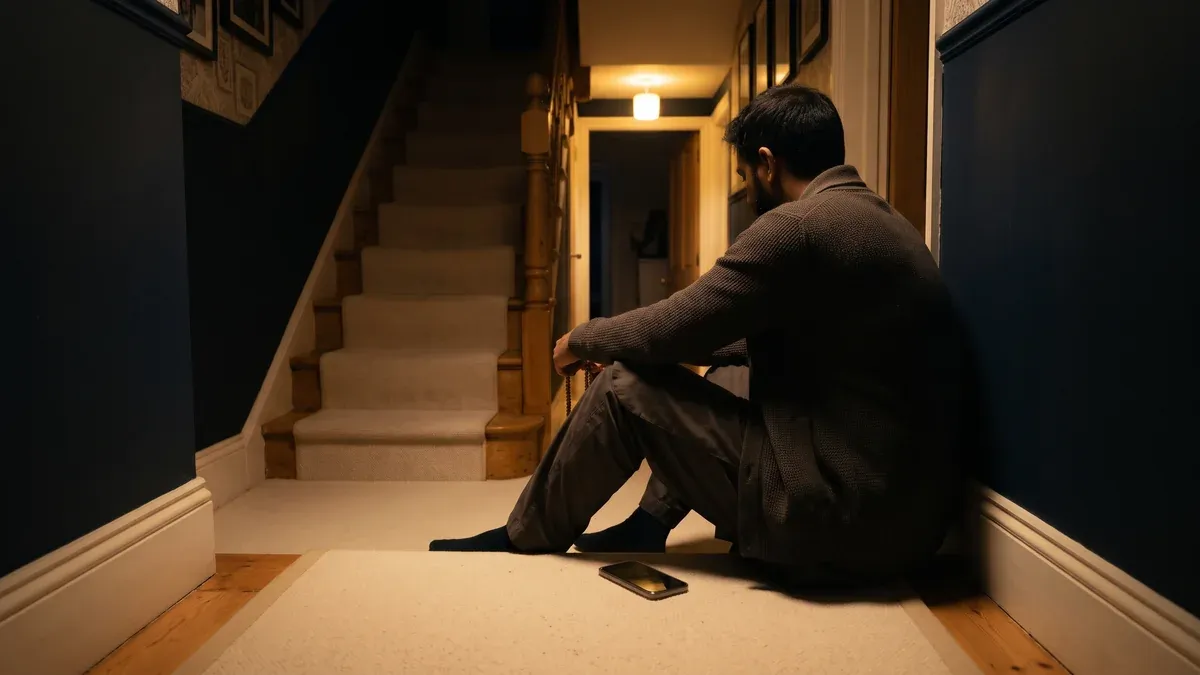
Dua for Anxiety and Stress: Duas from the Qur'an and Sunnah
If you are looking for a dua for anxiety and stress, the Prophet ﷺ left us several, each taught for a different kind of heaviness. When worry will not leave you and your chest feels tight, turning to Allah is the right first step, and the Qur'an gives verses that settle the heart.
Anxiety can also be a medical condition, and a dua never replaces a doctor. The two belong together, and Muslims have always sought relief through both.
Anxiety, stress and seeing a doctor
Racing thoughts, a pounding heart, broken sleep and constant dread can be anxiety in the medical sense, and a doctor can assess it. Seeking treatment is part of the Sunnah. The Prophet ﷺ taught:
مَا أَنْزَلَ اللَّهُ دَاءً إِلَّا أَنْزَلَ لَهُ شِفَاءً
"Allah has not sent down a disease except that He has also sent down its cure."
- Narrated by Abu Hurayrah, Sahih al-Bukhari
So dua and medical care go hand in hand. Ruqyah, which we explain in what ruqyah is in Islam, is recitation of the Qur'an and authentic duas, and it sits alongside medical care, never in place of it. Please do not stop any treatment a doctor has given you.
Duas of the Prophet ﷺ for worry, grief and distress
These are the duas the Prophet ﷺ taught for the moments when the heart is heavy. Say them slowly, and with certainty that Allah hears you.
The dua for worry and grief
Anas ibn Malik reported that the Prophet ﷺ used to say:
اللَّهُمَّ إِنِّي أَعُوذُ بِكَ مِنَ الْهَمِّ وَالْحَزَنِ، وَالْعَجْزِ وَالْكَسَلِ، وَالْبُخْلِ وَالْجُبْنِ، وَضَلَعِ الدَّيْنِ، وَغَلَبَةِ الرِّجَالِ
"O Allah, I seek refuge in You from worry and grief, from weakness and laziness, from miserliness and cowardice, from the weight of debt and from being overpowered by men."
- Narrated by Anas ibn Malik, Sahih al-Bukhari
It names worry and grief first, then the things that so often sit behind them: weakness, laziness, miserliness, cowardice, the weight of debt and being overpowered by others.
The dua of distress
Ibn Abbas reported that the Prophet ﷺ used to say this in times of distress:
لَا إِلَهَ إِلَّا اللَّهُ الْعَظِيمُ الْحَلِيمُ، لَا إِلَهَ إِلَّا اللَّهُ رَبُّ الْعَرْشِ الْعَظِيمِ، لَا إِلَهَ إِلَّا اللَّهُ رَبُّ السَّمَاوَاتِ وَرَبُّ الْأَرْضِ وَرَبُّ الْعَرْشِ الْكَرِيمِ
"There is no god but Allah, the Great, the Forbearing. There is no god but Allah, Lord of the mighty Throne. There is no god but Allah, Lord of the heavens, Lord of the earth and Lord of the noble Throne."
- Narrated by Abdullah ibn Abbas, Sahih al-Bukhari and Sahih Muslim
It begins with praise of Allah, not with the problem. Before we ask for anything, we remember who we are turning to.
The dua of Yunus
Allah tells us how Yunus (peace be upon him) called out from the depths of darkness, and how Allah answered him:
لَا إِلَٰهَ إِلَّا أَنتَ سُبْحَانَكَ إِنِّي كُنتُ مِنَ الظَّالِمِينَ ﴿٨٧﴾ فَاسْتَجَبْنَا لَهُ وَنَجَّيْنَاهُ مِنَ الْغَمِّ ۚ وَكَذَٰلِكَ نُنجِي الْمُؤْمِنِينَ
"There is no god but You. Glory be to You! Indeed, I have been among the wrongdoers." "So We responded to him and saved him from the distress. And thus do We save the believers."
- Surah Al-Anbiya, 21:87-88
This is a dua every believer can say, in any trouble.
The dua that places your trust in Allah's mercy
Abu Bakrah reported that the Prophet ﷺ taught this dua for the one in distress:
اللَّهُمَّ رَحْمَتَكَ أَرْجُو فَلَا تَكِلْنِي إِلَى نَفْسِي طَرْفَةَ عَيْنٍ، وَأَصْلِحْ لِي شَأْنِي كُلَّهُ، لَا إِلَهَ إِلَّا أَنْتَ
"O Allah, it is Your mercy that I hope for. So do not leave me to myself for the blink of an eye, and set right all my affairs. There is no god but You."
- Narrated by Abu Bakrah, Sunan Abi Dawud
In a few words it asks for mercy, for Allah's care over every part of our life, and for never being left to ourselves.
The dua that asks the Qur'an to lift the sorrow
Abdullah ibn Mas'ud reported that the Prophet ﷺ taught this dua for the one in worry and grief:
اللَّهُمَّ إِنِّي عَبْدُكَ، ابْنُ عَبْدِكَ، ابْنُ أَمَتِكَ، نَاصِيَتِي بِيَدِكَ، مَاضٍ فِيَّ حُكْمُكَ، عَدْلٌ فِيَّ قَضَاؤُكَ، أَسْأَلُكَ بِكُلِّ اسْمٍ هُوَ لَكَ، سَمَّيْتَ بِهِ نَفْسَكَ، أَوْ عَلَّمْتَهُ أَحَدًا مِنْ خَلْقِكَ، أَوْ أَنْزَلْتَهُ فِي كِتَابِكَ، أَوِ اسْتَأْثَرْتَ بِهِ فِي عِلْمِ الْغَيْبِ عِنْدَكَ، أَنْ تَجْعَلَ الْقُرْآنَ رَبِيعَ قَلْبِي، وَنُورَ صَدْرِي، وَجِلَاءَ حُزْنِي، وَذَهَابَ هَمِّي
"O Allah, I am Your servant, the son of Your servant, the son of Your maidservant. My forelock is in Your hand. Your judgement over me is ever-executed and Your decree over me is just. I ask You by every name that is Yours, by which You named Yourself, or taught to any of Your creation, or revealed in Your Book, or kept to Yourself in the knowledge of the unseen with You: make the Qur'an the spring of my heart, the light of my chest, the removal of my sorrow and the departure of my worry."
- Narrated by Abdullah ibn Mas'ud, Musnad Ahmad
It asks Allah to make His Book the relief of the heart. Take your time with the meaning of each phrase.
Verses of comfort from the Qur'an
Allah tells us where the heart finds rest:
الَّذِينَ آمَنُوا وَتَطْمَئِنُّ قُلُوبُهُم بِذِكْرِ اللَّهِ ۗ أَلَا بِذِكْرِ اللَّهِ تَطْمَئِنُّ الْقُلُوبُ
"Those who believe, and whose hearts find rest in the remembrance of Allah. Truly, in the remembrance of Allah do hearts find rest."
- Surah Ar-Ra'd, 13:28
And He gives His promise twice, so that it settles in the heart:
فَإِنَّ مَعَ الْعُسْرِ يُسْرًا ﴿٥﴾ إِنَّ مَعَ الْعُسْرِ يُسْرًا ﴿٦﴾
"For indeed, with hardship comes ease. Indeed, with hardship comes ease."
- Surah Ash-Sharh, 94:5-6
When the weight feels too much, remember what He tells us about what He asks of us:
لَا يُكَلِّفُ اللَّهُ نَفْسًا إِلَّا وُسْعَهَا
"Allah does not burden any soul beyond what it can bear."
- Surah Al-Baqarah, 2:286
Making these duas part of your day
Choose one or two of these duas and learn what they mean, so the words reach the heart and not only the tongue. Say them after your prayers and in the morning and evening, and again whenever the worry rises. They sit well beside the morning and evening remembrance and the surahs for protection in Islam.
When anxiety has a spiritual side
Not every case of anxiety is only medical. In our sessions we look at the whole picture: the spiritual, the emotional and the physical. Where anxiety can have a spiritual side, ruqyah can help alongside medical care, by the permission of Allah. What settles it is a proper assessment. Our article on whether ruqyah can treat anxiety and depression explains how that works.
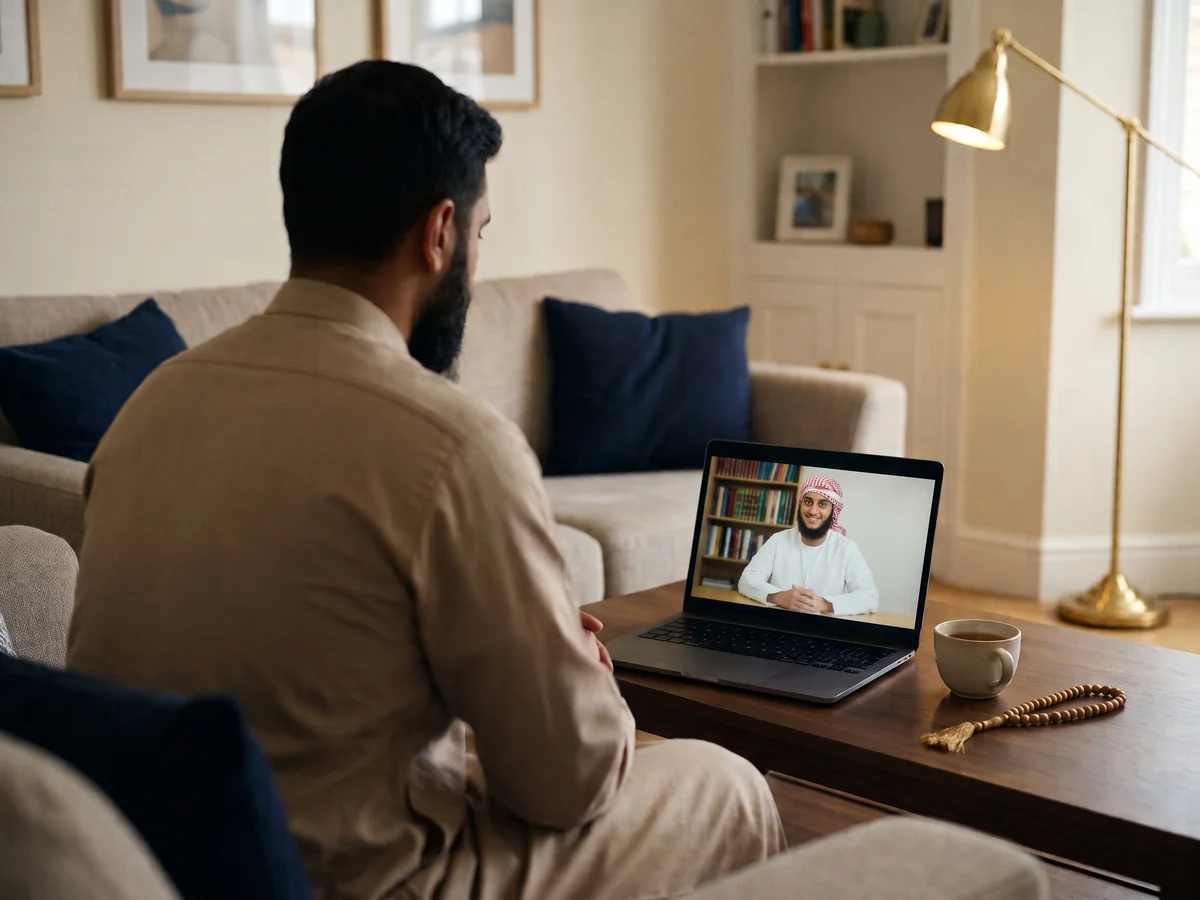
Book your one-to-one Zoom session
How we can help
Sister or brother, if worry has stayed with you, and the duas and medical care have not been enough, the first step is an assessment. We will listen, look at the whole picture with you, and give you a clear plan. Healing is by the permission of Allah. Every session is online over Zoom, strictly one to one and confidential, and open to you wherever you are. Find out more about our private one-to-one ruqyah treatment.
Frequently asked questions
Is there one dua for anxiety and stress?
There is no single dua. The Prophet ﷺ taught several for worry, grief and distress, and the Qur'an gives the dua of Yunus. Choose one or two, learn what they mean, and say them with presence of heart, in the morning, in the evening and whenever the worry returns.
Can I make dua in my own words?
Yes. Alongside the duas taught in the Sunnah, you can speak to Allah plainly, in your own language, about exactly what you are feeling. He knows what is in the heart. Many people begin with a dua from the Sunnah and then speak to Allah in their own words.
Does anxiety mean my faith is weak?
No. The Prophet ﷺ taught these duas for worry and grief to his Ummah, and used to seek refuge in Allah from worry and grief himself. Feeling anxious is not a sign of weak faith. Seeing a doctor, making dua and seeking ruqyah can all be part of caring for yourself.
When should I see a doctor, and when should I seek ruqyah?
See a doctor if anxiety is affecting your sleep, appetite, work or daily life, and carry on with any treatment you are given. Dua and ruqyah can go alongside that care. If the heaviness continues despite it, book an assessment and we will look at the whole picture with you.
Medical note: anxiety and stress can have medical causes. Dua and ruqyah work alongside medical care, never in place of it. If you have physical or mental health symptoms, please see a doctor as well. If you have thoughts of harming yourself, seek urgent help straight away.